
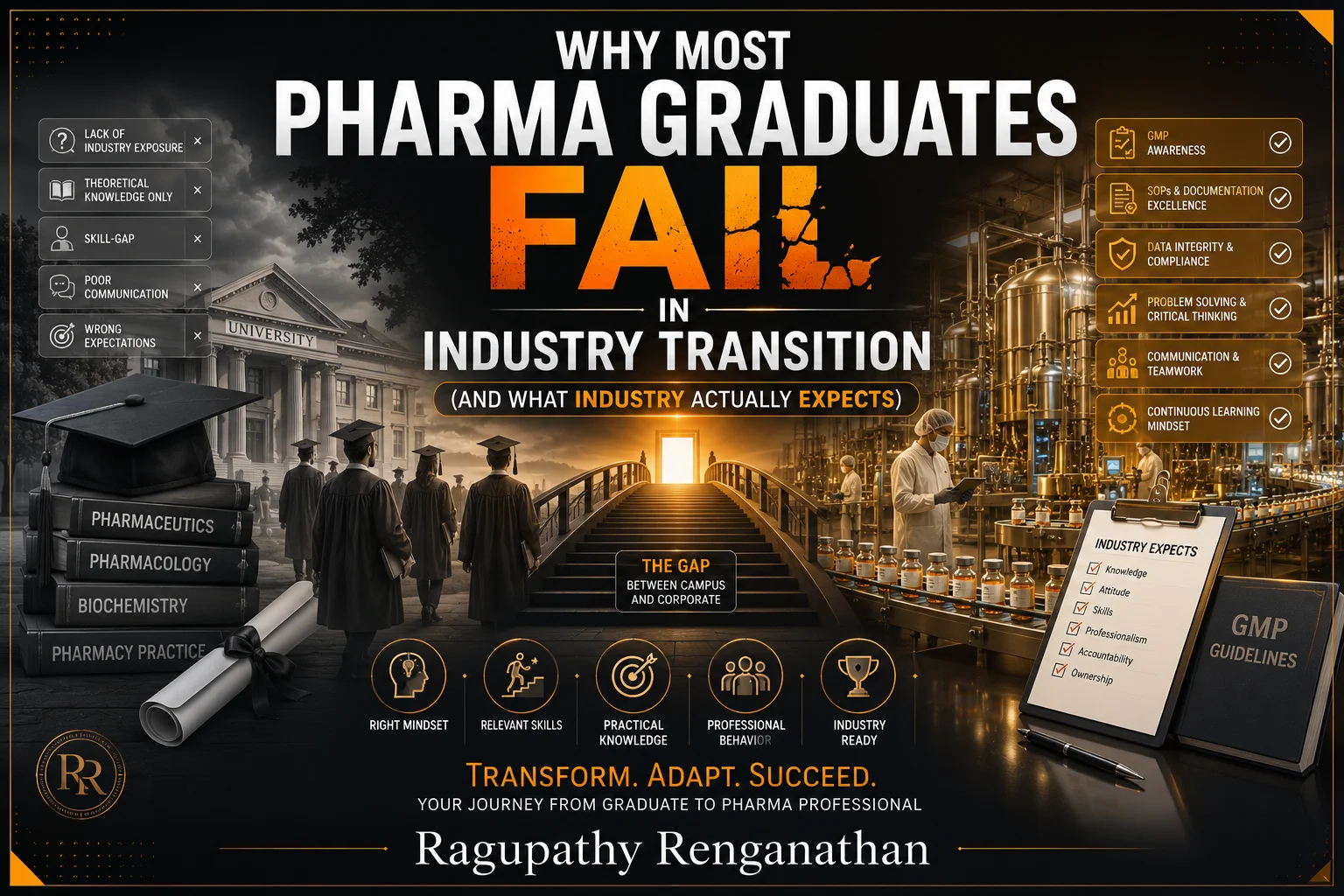

Many graduates believe companies hire primarily based on marks, degrees, or university reputation. While educational qualifications remain important, employers generally evaluate candidates using a broader combination of technical competence, professional attitude, adaptability, and potential for long-term development.
One of the first qualities employers value is a strong understanding of pharmaceutical quality systems. Candidates should be familiar with concepts such as GMP, Good Documentation Practices (GDP), data integrity, contamination control, validation, qualification, deviation management, Corrective and Preventive Actions (CAPA), change control, and quality risk management. Even if applicants have limited industrial experience, demonstrating awareness of these concepts signals readiness to work in regulated environments.
Communication skills consistently rank among the most important expectations. Pharmaceutical professionals prepare reports, participate in investigations, communicate with cross-functional teams, respond during audits, interact with regulators, and present technical information clearly. Graduates who can express ideas confidently and professionally often distinguish themselves during interviews and throughout their careers.
Professional attitude is equally significant. Employers seek individuals who demonstrate responsibility, integrity, curiosity, willingness to learn, and respect for procedures. A candidate who openly acknowledges knowledge gaps while showing enthusiasm for learning is often viewed more positively than someone who appears overconfident but lacks practical understanding.
Problem-solving ability has become increasingly valuable as manufacturing processes grow more sophisticated. Organizations appreciate employees who approach challenges logically, collect relevant information, analyze root causes, evaluate alternatives, and recommend practical solutions rather than simply reporting problems.