
Every year, universities and pharmacy colleges around the world produce thousands of graduates equipped with extensive knowledge of pharmaceutical sciences. Students spend years learning medicinal chemistry, pharmaceutics, pharmacology, pharmaceutical analysis, microbiology, biotechnology, regulatory affairs, and various aspects of drug development. They master theoretical concepts, perform laboratory experiments, complete research projects, and successfully pass university examinations. Yet, despite this strong academic foundation, many fresh graduates experience a significant shock when they step into their first pharmaceutical company.
The transition from classroom learning to industrial practice is often far more challenging than anticipated. Many graduates who excel academically find themselves struggling with documentation systems, regulatory compliance, manufacturing workflows, quality culture, audit readiness, and the pace of industrial operations. At the same time, pharmaceutical companies frequently report difficulty in finding candidates who are "industry ready," despite the large number of graduates entering the job market each year.
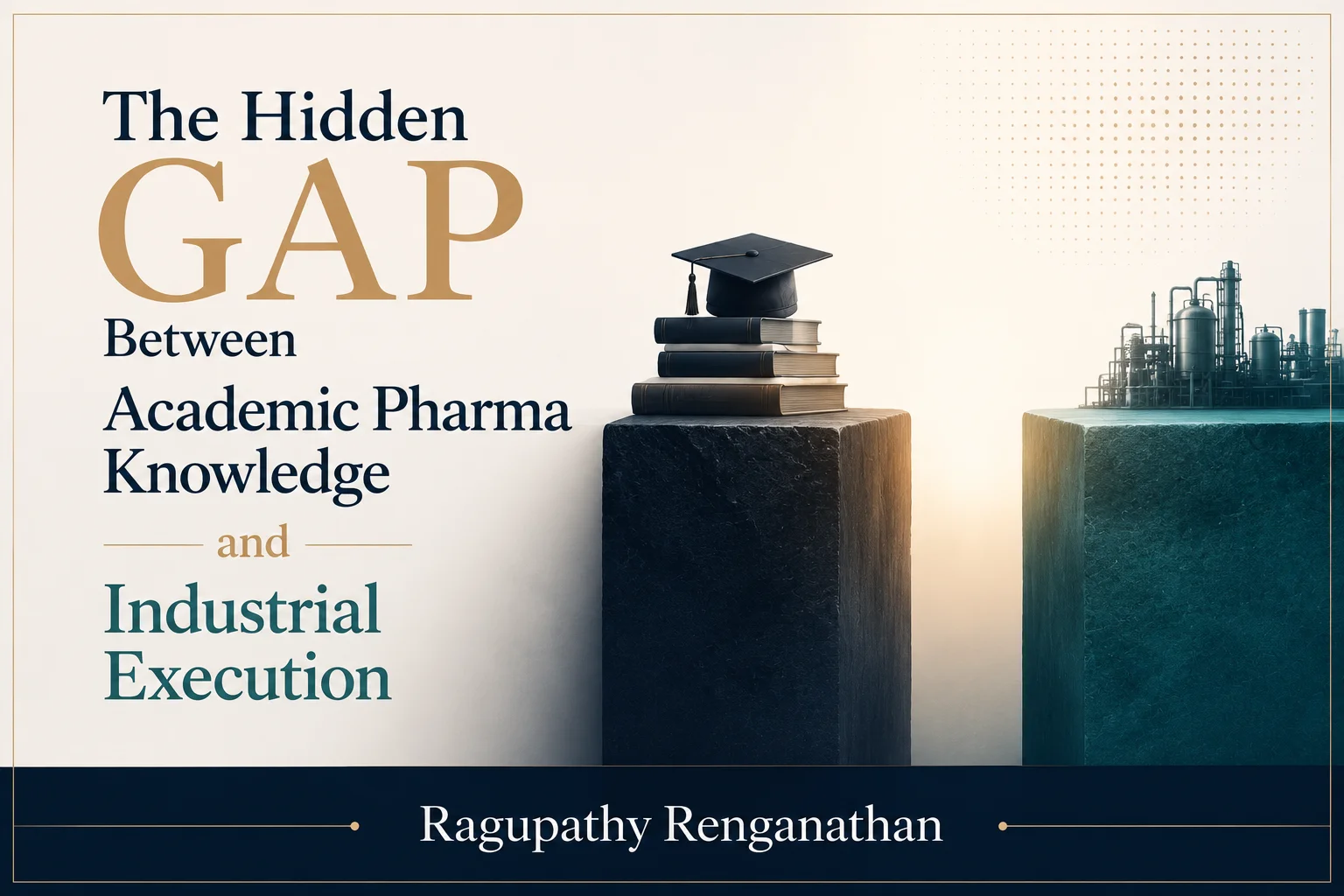
This apparent contradiction highlights one of the most overlooked issues in pharmaceutical education—the hidden gap between academic knowledge and industrial execution. Universities are primarily designed to teach scientific principles, while pharmaceutical companies expect professionals who can apply those principles consistently within highly regulated, quality-driven, and commercially demanding environments.
Industrial execution requires much more than understanding pharmaceutical science. It demands discipline, precision, documentation excellence, teamwork, regulatory awareness, problem-solving ability, digital competence, communication skills, and a mindset focused on continuous improvement. The pharmaceutical industry is not simply a place where scientific knowledge is applied; it is an ecosystem where every activity must comply with strict regulatory expectations while ensuring patient safety, product quality, and operational efficiency.
Recognizing this hidden gap is essential for students, educators, training institutions, employers, and policymakers alike. Closing the divide between education and industry will not only improve graduate employability but also strengthen the pharmaceutical workforce needed to support future healthcare innovation.
Why Academic Excellence Alone Does Not Guarantee Industrial Success