
Introduction
In the highly competitive pharmaceutical industry, success is no longer determined solely by manufacturing capability or regulatory compliance. The true differentiator lies in selecting the right products before investing millions in development, technology transfer, bioequivalence studies, regulatory filings, and commercialization. Generic pharmaceutical companies today operate in an environment characterized by intense price erosion, increasing regulatory scrutiny, global supply chain disruptions, patent litigation, and rapidly evolving healthcare policies. Under these circumstances, strategic product selection has become one of the most critical boardroom decisions influencing long-term profitability and sustainable growth.
Many generic companies continue to choose products based primarily on market size or competitor portfolios. While these factors remain relevant, they no longer guarantee commercial success. Numerous blockbuster molecules have transformed into low-margin commodities due to excessive competition, aggressive pricing, and market saturation. Conversely, niche generic products with moderate market demand often generate superior returns because of limited competition, complex manufacturing requirements, specialized regulatory pathways, or difficult supply chains.
For CEOs and senior leadership teams, product selection must therefore evolve into a structured strategic exercise involving commercial intelligence, intellectual property assessment, manufacturing feasibility, regulatory complexity, financial modelling, competitive analysis, and long-term portfolio optimization. Every product entering the development pipeline should align with corporate capabilities, geographical expansion goals, regulatory strengths, and commercial objectives. A disciplined portfolio strategy minimizes investment risks while maximizing sustainable profitability.
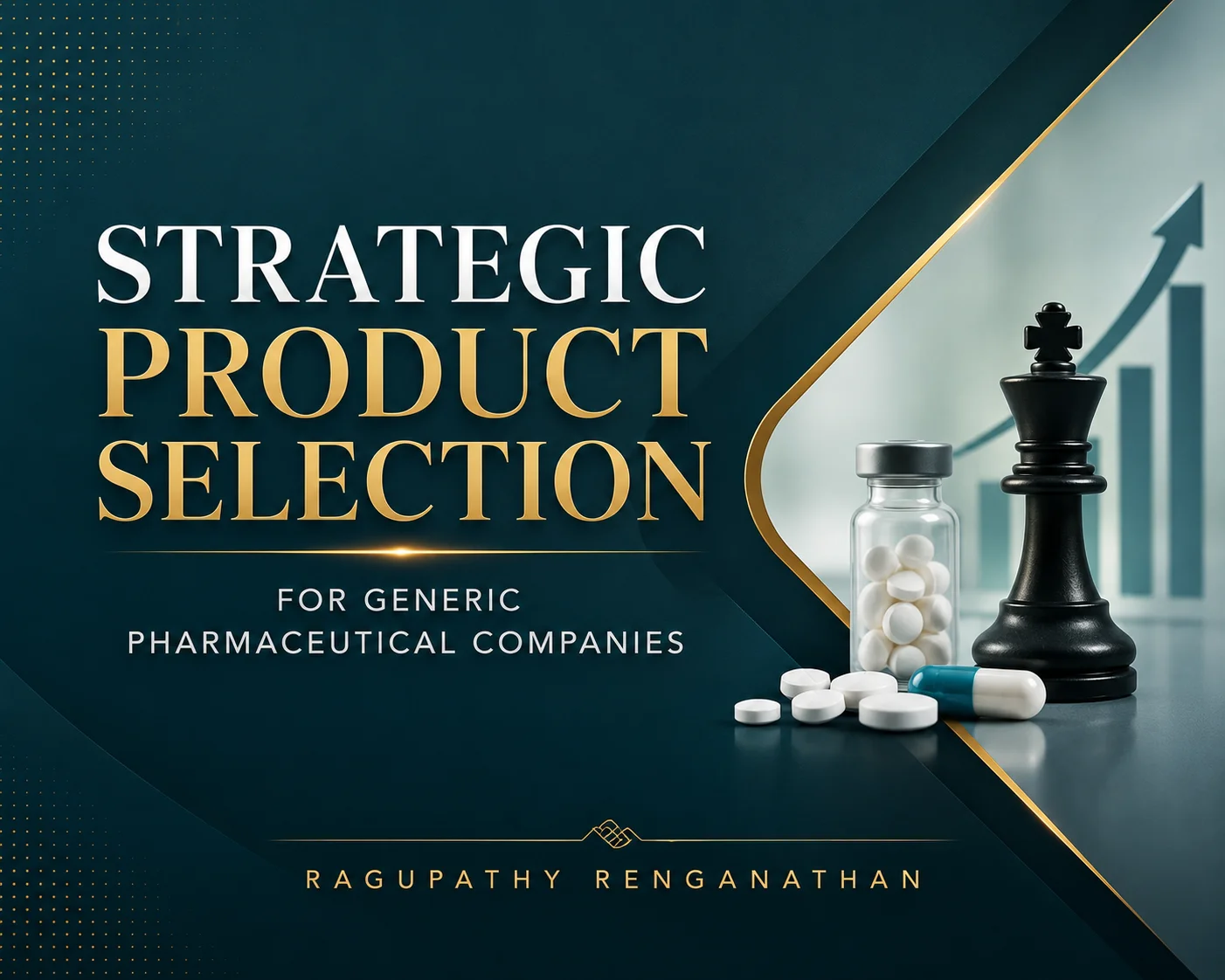
This article explores the strategic framework that successful generic pharmaceutical companies use when evaluating new development opportunities. It examines commercial considerations, technical feasibility, regulatory intelligence, lifecycle management, and portfolio optimization strategies that enable pharmaceutical organizations to build resilient and profitable generic businesses.