
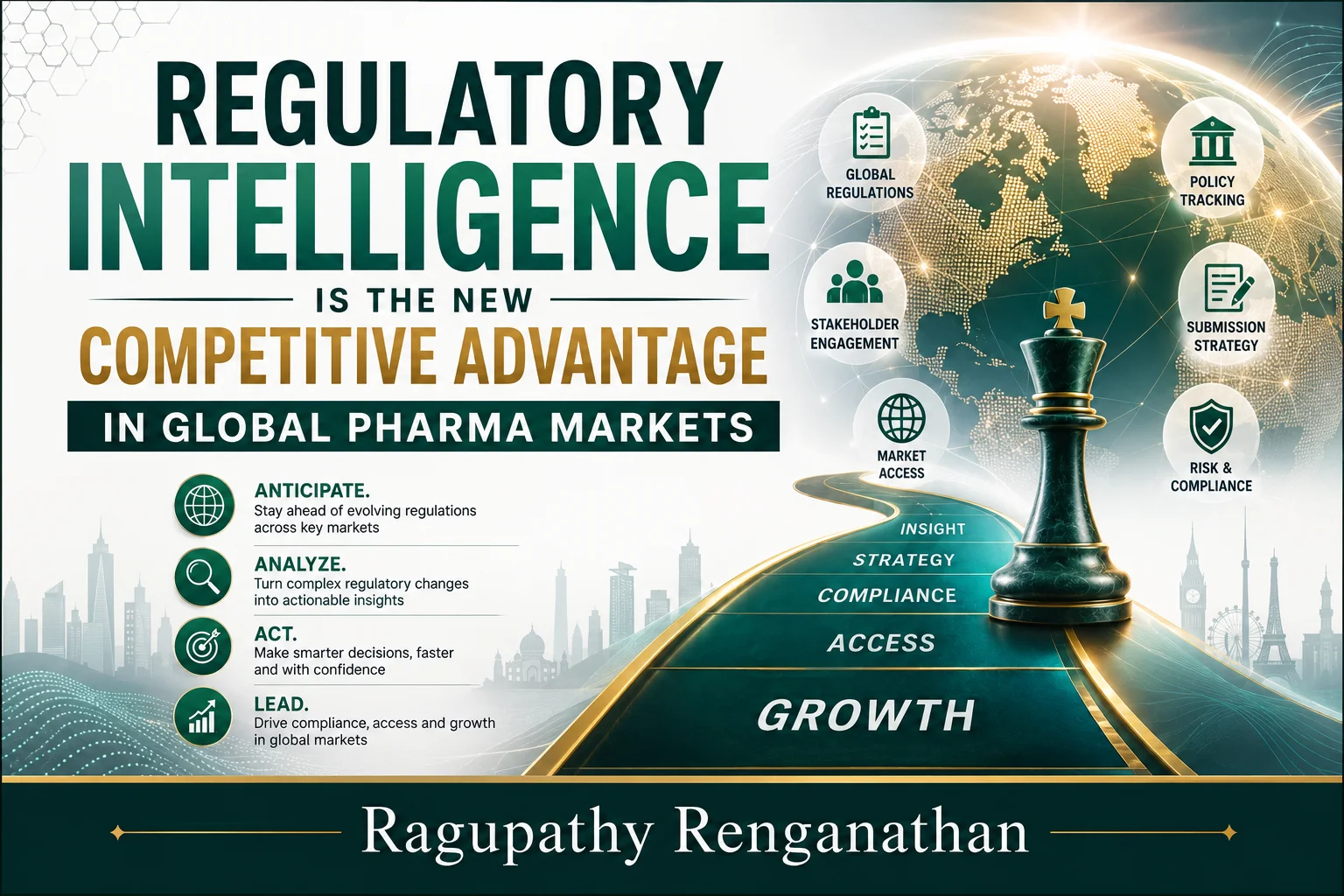

The pharmaceutical industry has always operated within one of the world's most complex and highly regulated environments. Every stage of a medicine's lifecycle—from research and development to clinical trials, manufacturing, marketing authorization, distribution, and post-marketing surveillance—is governed by stringent regulations designed to ensure patient safety and product quality. Traditionally, pharmaceutical companies viewed regulatory compliance primarily as a legal obligation and a prerequisite for obtaining product approvals.
Regulatory Affairs teams were often perceived as departments responsible for preparing submissions, responding to regulatory queries, maintaining licenses, and ensuring that products remained compliant throughout their commercial lifecycle.
However, the global pharmaceutical landscape has changed dramatically over the past two decades. Scientific innovation is accelerating at an unprecedented pace. Personalized medicines, biologics, biosimilars, cell and gene therapies, artificial intelligence, digital health technologies, and advanced manufacturing platforms are redefining healthcare.
Simultaneously, regulatory agencies across the world are continuously updating their expectations to keep pace with these technological advances. Guidelines evolve frequently, new quality standards emerge, inspection trends shift, and international regulatory harmonization continues to expand.
In this rapidly changing environment, merely complying with regulations is no longer sufficient. Pharmaceutical organizations that anticipate regulatory changes, understand evolving agency expectations, analyze global regulatory trends, and integrate regulatory knowledge into strategic business decisions gain a significant competitive advantage. This capability is known as Regulatory Intelligence.
Regulatory Intelligence is the systematic process of collecting, analyzing, interpreting, and applying regulatory information to support informed business decisions. Rather than reacting to regulatory changes after they occur, companies using Regulatory Intelligence proactively prepare for future requirements, minimize compliance risks, accelerate product approvals, optimize global market access, and strengthen their overall competitiveness.
Today, Regulatory Intelligence is no longer limited to Regulatory Affairs departments. It influences research and development, clinical operations, quality assurance, manufacturing, supply chain management, pharmacovigilance, commercial strategy, and executive decision-making. Organizations that successfully integrate Regulatory Intelligence into their operations are better positioned to navigate uncertainty, respond quickly to changing regulations, and deliver innovative medicines to patients around the world.