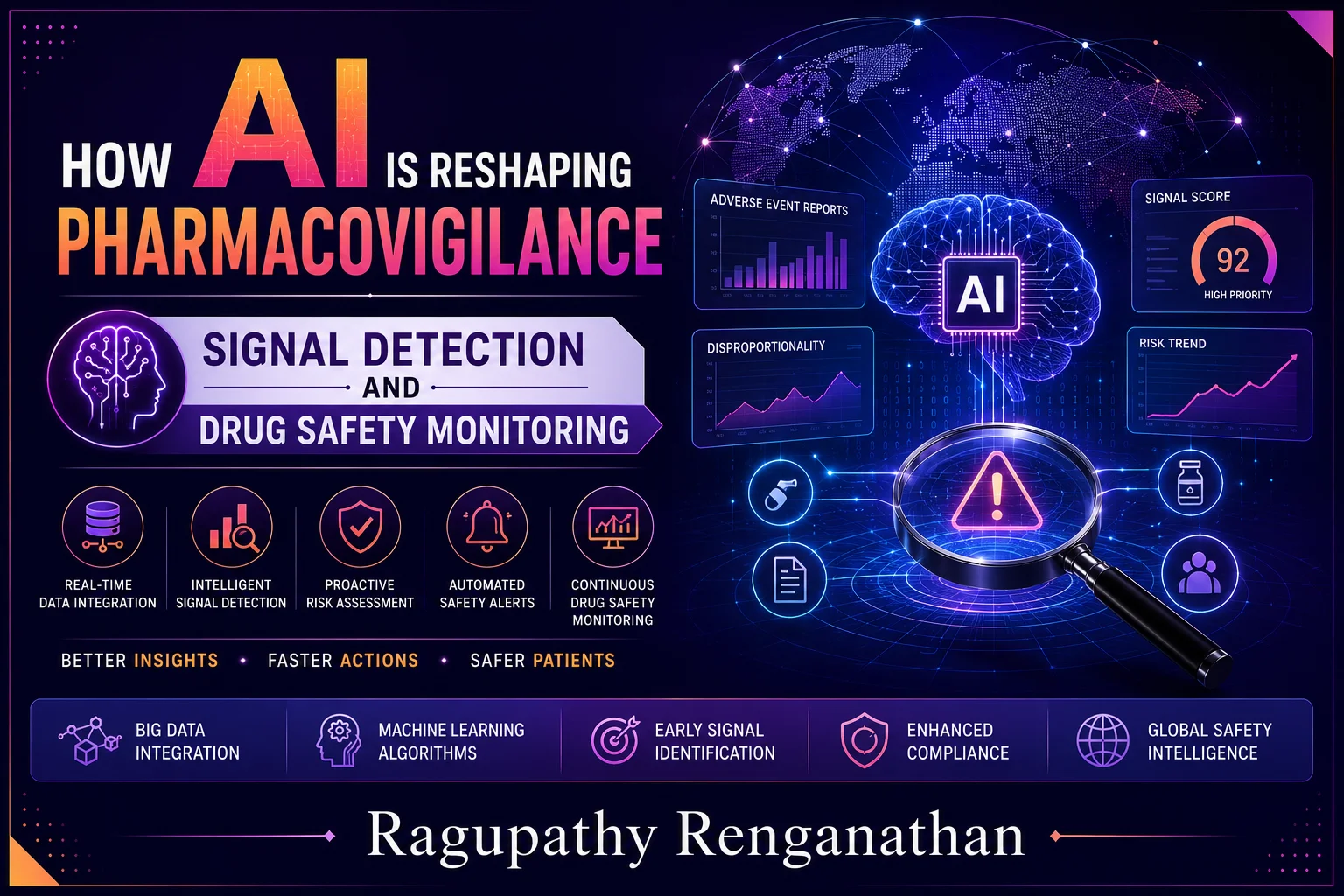

Signal detection represents one of the most valuable applications of Artificial Intelligence in pharmacovigilance. A safety signal refers to information suggesting a possible new causal association between a medicine and an adverse event that warrants further investigation. Detecting these signals as early as possible enables pharmaceutical companies and regulatory authorities to implement appropriate risk management measures before larger patient populations are affected.
Machine learning algorithms excel at recognizing complex patterns across extensive datasets. Instead of relying solely on predefined statistical thresholds, AI models evaluate multiple variables simultaneously, including patient demographics, medical history, concomitant medications, dosage, treatment duration, laboratory results, geographic trends, reporting frequency, and historical safety profiles. This multidimensional analysis often identifies emerging safety concerns earlier than traditional methods.
Natural Language Processing (NLP), a branch of AI focused on understanding human language, has become particularly valuable for pharmacovigilance. Many adverse event reports, clinical narratives, physician notes, scientific publications, and patient communications contain unstructured text that is difficult to analyze manually. NLP algorithms automatically extract relevant clinical information, identify medical terminology, recognize adverse events, detect drug names, and classify reports with remarkable speed and consistency.
Literature surveillance has also been transformed by AI. Instead of manually reviewing thousands of journal articles, conference abstracts, and case reports, intelligent systems continuously monitor scientific publications, identify safety-relevant content, eliminate duplicate records, and prioritize articles requiring expert review. This significantly improves operational efficiency while reducing the likelihood of overlooking important safety information.