
Introduction
Pharmacovigilance has undergone a remarkable transformation over the past decade, evolving from a predominantly manual, compliance-driven function into a strategic discipline powered by digital technologies, advanced analytics, and data science. The exponential increase in adverse event reports, growing regulatory expectations, expanding global clinical development programmed, and the availability of real-world data have significantly increased the complexity of pharmacovigilance operations. Traditional safety processes, which once relied heavily on manual case processing and retrospective analyses, are no longer sufficient to meet the speed, accuracy, and scalability demanded by today's pharmaceutical industry.
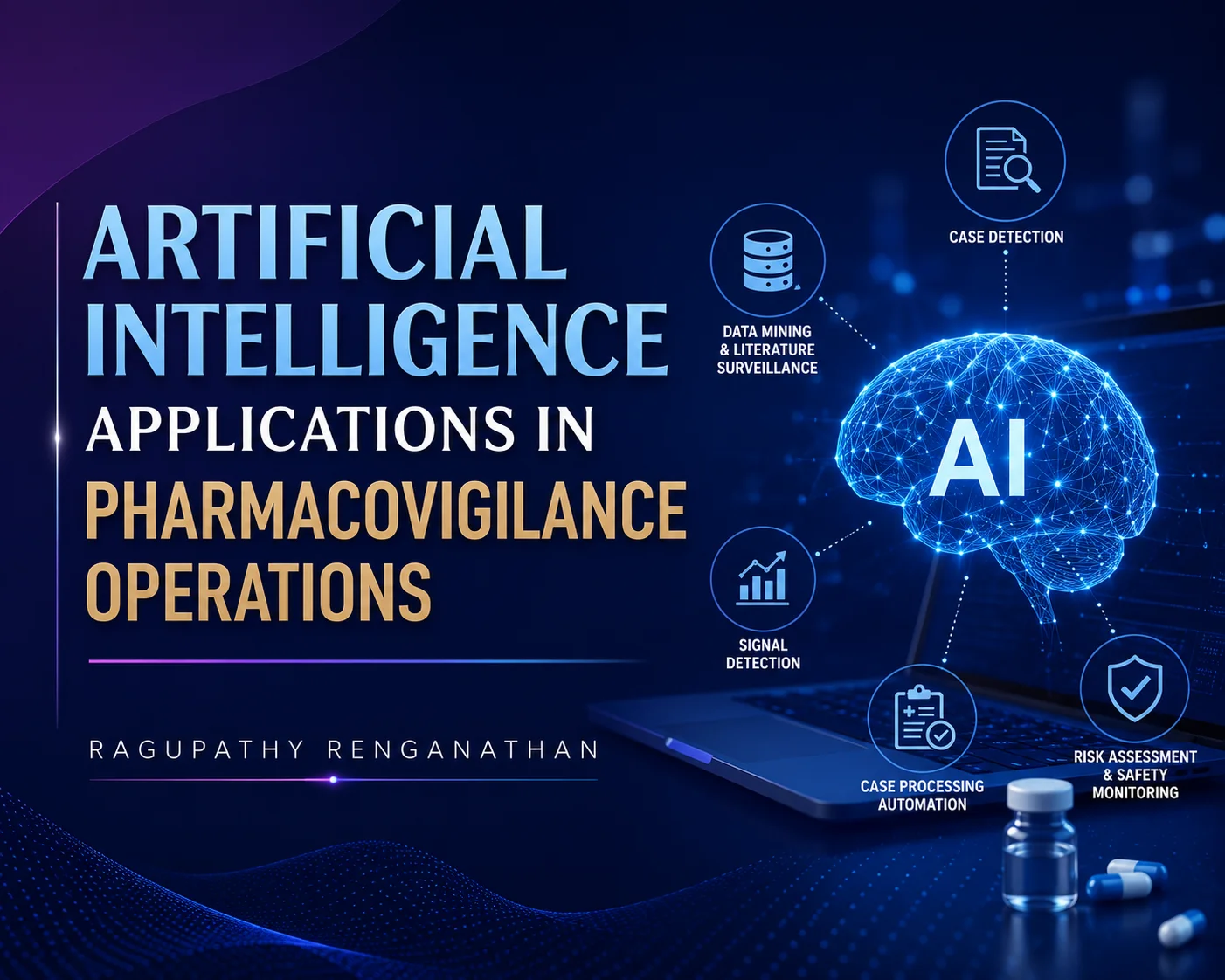
Artificial Intelligence (AI) has emerged as one of the most disruptive technologies reshaping pharmacovigilance. Rather than replacing pharmacovigilance professionals, AI enables organizations to automate repetitive tasks, improve data quality, accelerate signal detection, enhance regulatory compliance, and support evidence-based decision-making. Pharmaceutical companies, Contract Research Organizations (CROs), Marketing Authorization Holders (MAHs), and regulatory agencies are increasingly investing in AI-driven pharmacovigilance platforms to improve operational efficiency while maintaining the highest standards of patient safety.
Modern pharmacovigilance generates enormous volumes of structured and unstructured data from spontaneous adverse event reports, clinical trials, electronic health records, scientific literature, social media platforms, patient support programmed, wearable devices, regulatory databases, and real-world evidence sources. Processing such vast datasets manually is resource-intensive and susceptible to inconsistencies. AI technologies—including Machine Learning (ML), Natural Language Processing (NLP), Robotic Process Automation (RPA), Large Language Models (LLMs), computer vision, and predictive analytics—provide pharmaceutical organizations with the capability to analyze this information at unprecedented speed and scale.
Global regulatory authorities, including the European Medicines Agency (EMA), the US Food and Drug Administration (FDA), the Medicines and Healthcare products Regulatory Agency (MHRA), and other ICH member agencies, continue to encourage innovation while emphasizing that AI applications must remain transparent, validated, and scientifically justified. Consequently, successful AI implementation requires not only technological sophistication but also robust governance, quality systems, regulatory oversight, and human medical expertise.