

Introduction
The primary goal of the pharmaceutical industry is to develop and provide medicines that improve patient health and quality of life. Before a medicine reaches the market, it undergoes extensive research, laboratory testing, animal studies, and clinical trials to establish its safety and effectiveness. However, even after rigorous testing, it is impossible to identify every potential side effect or safety concern during the development phase. Some adverse effects may only become apparent when a medicine is used by millions of patients across different age groups, medical conditions, ethnic backgrounds, and healthcare settings.
This is where Pharmacovigilance plays a critical role.
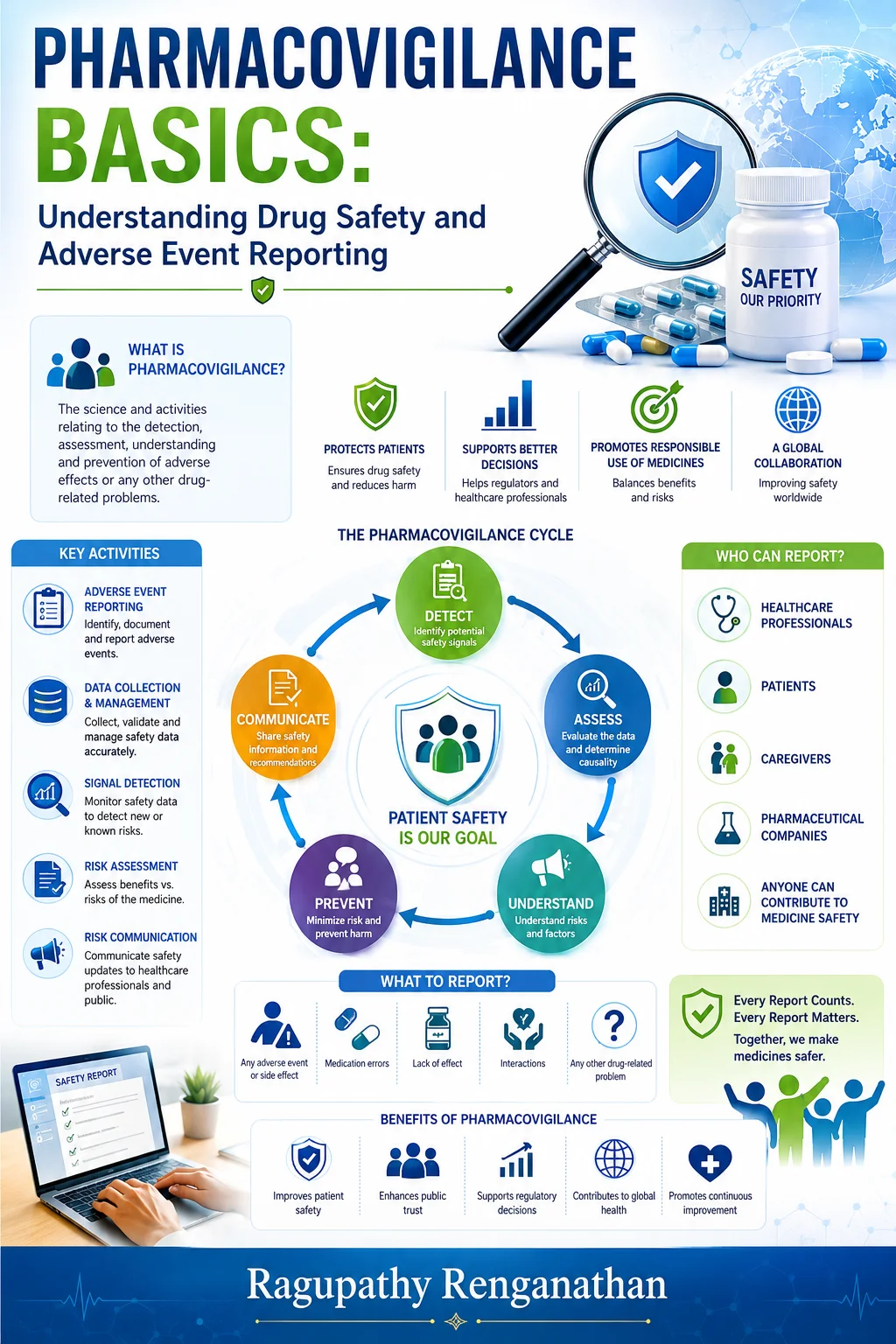
Pharmacovigilance is the science and activities related to the detection, assessment, understanding, and prevention of adverse effects or any other medicine-related problems. It serves as a continuous safety monitoring system that helps healthcare professionals, pharmaceutical companies, and regulatory authorities identify potential risks associated with medicines and take appropriate actions to protect public health.
In today's healthcare environment, patient safety is a top priority. Regulatory agencies around the world require pharmaceutical companies to actively monitor the safety profile of their products throughout their lifecycle. Pharmacovigilance helps ensure that the benefits of medicines continue to outweigh their risks and that any emerging safety concerns are identified and managed promptly.
Over the past few decades, Pharmacovigilance has evolved into one of the most important functions within the pharmaceutical industry. It combines medical knowledge, scientific analysis, regulatory compliance, and risk management to support safe medicine use. For students, fresh graduates, healthcare professionals, and individuals considering a career in the pharmaceutical industry, understanding Pharmacovigilance is essential because it directly contributes to patient well-being and public health.
This article provides a comprehensive overview of Pharmacovigilance, its objectives, key activities, adverse event reporting processes, regulatory requirements, and career opportunities.
What is Pharmacovigilance?
The term Pharmacovigilance is derived from two words: "Pharmakon," meaning drug, and "Vigilare," meaning to keep watch. In simple terms, Pharmacovigilance means keeping a continuous watch on the safety of medicines.
According to the World Health Organization (WHO),
Pharmacovigilance is the science and activities concerned with the detection, assessment, understanding, and prevention of adverse effects or any other medicine-related problems.
The primary objective of Pharmacovigilance is to monitor drug safety after medicines are approved and marketed. While clinical trials provide valuable information about safety and efficacy, they involve limited numbers of participants under controlled conditions. Once a product enters the market, it is exposed to a much larger and more diverse patient population, increasing the likelihood of identifying rare or previously unknown adverse effects.
Pharmacovigilance helps collect, analyze, and evaluate safety information from real-world usage, allowing healthcare systems to make informed decisions regarding medicine safety.
Why Pharmacovigilance is Important
Every medicine has benefits as well as potential risks. The purpose of Pharmacovigilance is not to eliminate all risks but to understand and manage them effectively.
Some adverse reactions are extremely rare and may occur only after widespread use of a medicine. Others may emerge when medicines are used in specific patient populations such as children, elderly patients, pregnant women, or individuals with multiple medical conditions.
Without Pharmacovigilance, these safety signals could go unnoticed, potentially putting patients at risk. By continuously monitoring adverse events, healthcare organizations can identify emerging risks and take appropriate actions such as updating product labels, issuing safety communications, restricting product use, or in extreme cases, withdrawing products from the market.
Pharmacovigilance contributes significantly to patient safety, regulatory compliance, public confidence, and evidence-based healthcare decision-making.
Objectives of Pharmacovigilance
The primary objective of Pharmacovigilance is to improve patient safety and public health by identifying and minimizing medicine-related risks.
Another important objective is to detect previously unknown adverse reactions and evaluate known adverse effects more thoroughly. Continuous monitoring allows healthcare professionals and regulatory authorities to better understand the safety profile of medicines over time.
Pharmacovigilance also aims to assess the balance between benefits and risks. A medicine may have side effects, but if its therapeutic benefits significantly outweigh those risks, it can continue to be used safely with appropriate precautions.
In addition, Pharmacovigilance supports regulatory decision-making, promotes rational medicine use, and contributes to ongoing improvements in healthcare quality.
Understanding Adverse Events and Adverse Drug Reactions
To understand Pharmacovigilance, it is important to distinguish between an Adverse Event and an Adverse Drug Reaction.
An Adverse Event (AE) refers to any undesirable medical occurrence experienced by a patient during treatment with a medicine, regardless of whether the medicine caused the event.
For example, if a patient taking an antibiotic develops a headache, the headache may be reported as an adverse event even if there is no proven connection to the medication.
An Adverse Drug Reaction (ADR), on the other hand, refers to a harmful and unintended response that is suspected to be related to the use of a medicine at normal doses.
The distinction is important because Pharmacovigilance professionals evaluate adverse events to determine whether a causal relationship with the medicine exists.
Types of Adverse Drug Reactions
Adverse drug reactions can vary in severity, frequency, and mechanism.
Some reactions are predictable and related to the known pharmacological action of the drug. For example, drowsiness caused by certain antihistamines is a well-known and expected adverse reaction.
Other reactions may be unpredictable and occur only in susceptible individuals. These include allergic reactions, immune-mediated responses, or rare genetic sensitivities.
Adverse reactions may also be classified as mild, moderate, severe, serious, expected, or unexpected depending on their nature and impact on the patient.
Understanding these classifications helps healthcare professionals assess risks and determine appropriate reporting requirements.
Sources of Safety Information
Pharmacovigilance relies on multiple sources of safety information to monitor medicine safety effectively.
Spontaneous reporting systems are among the most common sources. Healthcare professionals, patients, pharmacists, and pharmaceutical companies submit reports describing suspected adverse reactions.