

Introduction
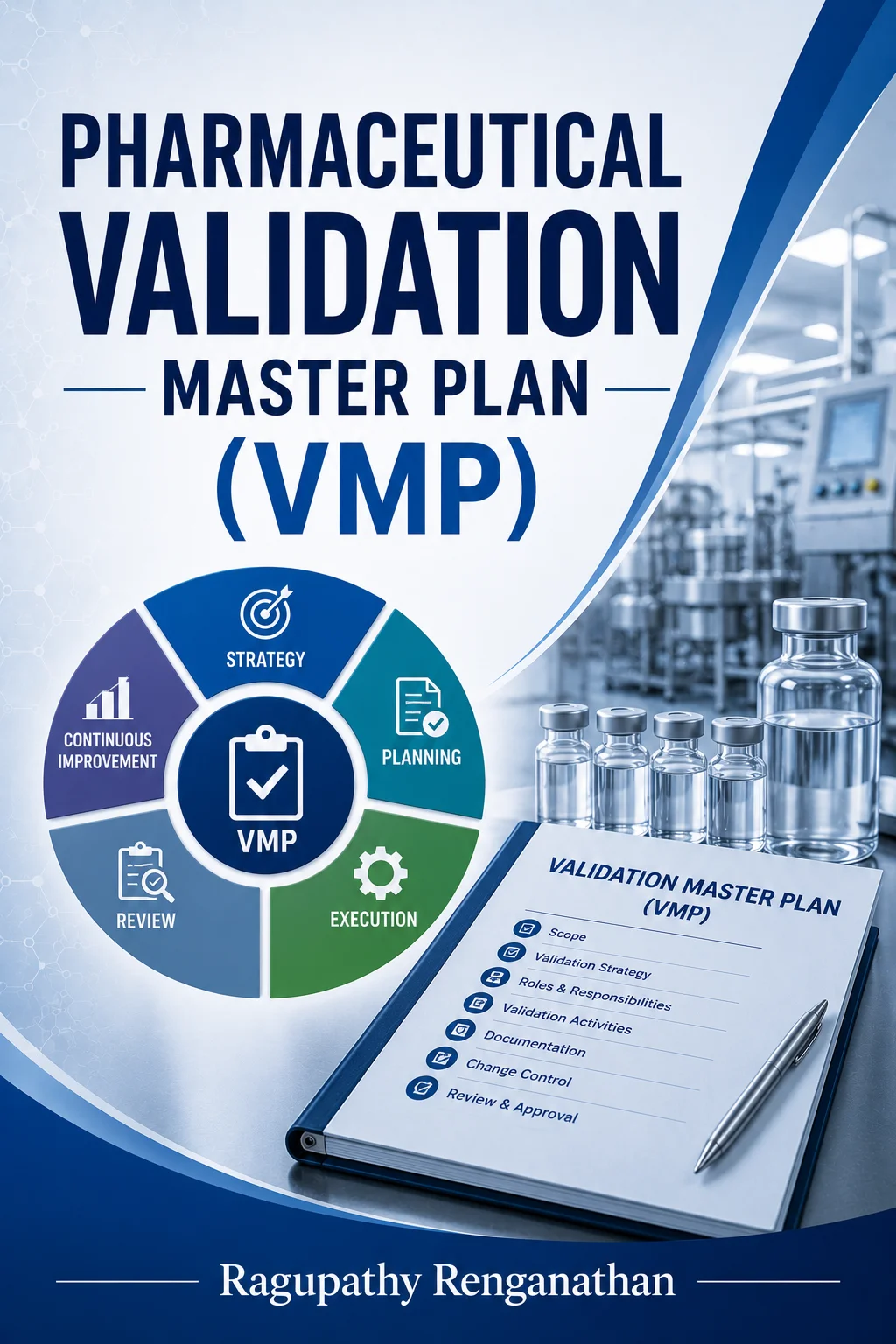
Validation is one of the most fundamental elements of pharmaceutical quality assurance, ensuring that facilities, equipment, utilities, computerized systems, manufacturing processes, analytical methods, and cleaning procedures consistently perform as intended. Regulatory agencies worldwide expect pharmaceutical manufacturers to establish a systematic approach to validation rather than validating individual systems in isolation. This systematic approach is documented in a Validation Master Plan (VMP), a comprehensive document that defines an organization's overall validation philosophy, strategy, responsibilities, schedules, and documentation requirements.
A Validation Master Plan serves as the roadmap for all validation activities within a pharmaceutical facility. It ensures that validation efforts are organized, scientifically justified, risk-based, and aligned with current Good Manufacturing Practices (GMP). Rather than treating validation as a one-time regulatory exercise, the VMP promotes a lifecycle approach that begins during facility design and continues throughout the operational life of equipment and processes. A well-prepared VMP not only satisfies regulatory expectations but also strengthens product quality, improves operational efficiency, minimizes compliance risks, and supports continuous improvement across the organization.
Understanding the Validation Master Plan
A Validation Master Plan is a high-level document that explains how validation activities will be planned, executed, documented, reviewed, approved, and maintained within a pharmaceutical organization. It establishes the framework under which all validation projects are conducted and ensures consistency across departments such as Production, Engineering, Quality Assurance, Quality Control, Information Technology, Warehousing, and Maintenance.
Unlike individual validation protocols that focus on a specific piece of equipment or process, the VMP provides an organization-wide overview of validation activities. It defines the scope of validation, identifies systems requiring qualification, assigns responsibilities, establishes documentation requirements, outlines acceptance criteria, and describes how changes, deviations, and periodic reviews will be managed. The document also ensures that validation activities are prioritized based on product quality risks rather than convenience or project timelines.
The primary objective of the Validation Master Plan is to demonstrate that the pharmaceutical facility has established a structured validation program capable of consistently producing products that meet predefined quality, safety, and efficacy requirements. It provides regulators with confidence that validation activities are planned scientifically and executed according to approved procedures rather than being performed in an ad hoc manner.
Importance of a Validation Master Plan
The importance of a Validation Master Plan extends far beyond regulatory compliance. Pharmaceutical manufacturing involves numerous interconnected systems where the performance of one component can significantly influence another. Without an integrated validation strategy, organizations may overlook critical interactions between equipment, utilities, computerized systems, environmental controls, and manufacturing processes.
A properly developed VMP ensures that validation efforts are coordinated, resources are allocated effectively, and project timelines remain realistic. It minimizes duplication of work, prevents documentation gaps, and facilitates communication among different functional departments. By establishing standardized validation practices, the VMP also improves consistency in protocol preparation, execution, reporting, deviation management, and approval processes.
Regulatory agencies such as the US FDA, European Medicines Agency (EMA), World Health Organization (WHO), and PIC/S expect pharmaceutical manufacturers to maintain comprehensive validation programs supported by documented planning. During inspections, the Validation Master Plan often serves as one of the first documents reviewed because it provides inspectors with an overall understanding of the facility's validation strategy and demonstrates management's commitment to quality and compliance.
Scope and Key Components of the VMP
An effective Validation Master Plan clearly defines the scope of validation activities throughout the organization. It typically includes facilities, utilities, manufacturing equipment, laboratory instruments, computerized systems, analytical methods, cleaning procedures, manufacturing processes, packaging operations, storage systems, and supporting infrastructure that may directly or indirectly affect product quality.
The document begins by describing the facility, manufacturing operations, organizational structure, and applicable regulatory standards. It explains the company's validation policy and quality objectives while identifying the departments responsible for implementing and maintaining validation activities. Roles and responsibilities are clearly assigned to ensure accountability throughout the validation lifecycle.
The VMP also provides an inventory of systems requiring qualification and categorizes them according to their criticality. Critical utilities such as purified water systems, Water for Injection (WFI), clean steam, compressed air, HVAC systems, and environmental monitoring systems receive particular attention because of their direct impact on product quality. Manufacturing equipment, filling machines, reactors, granulators, tablet compression machines, packaging lines, and laboratory instruments are similarly identified and prioritized based on risk assessments.