

Introduction
The pharmaceutical industry is one of the most highly regulated industries in the world. Every medicine, vaccine, medical device, or healthcare product must undergo extensive evaluation before it can be marketed and made available to patients. Regulatory authorities across the globe establish strict requirements to ensure that pharmaceutical products are safe, effective, and of high quality. Navigating these complex regulatory requirements requires a specialized function within pharmaceutical organizations known as Regulatory Affairs (RA).
Regulatory Affairs serves as the bridge between pharmaceutical companies and health authorities. It ensures that products comply with applicable regulations throughout their lifecycle, from initial development and clinical trials to product approval, commercialization, and post-marketing activities. Without Regulatory Affairs professionals, pharmaceutical companies would face significant challenges in obtaining product approvals, maintaining compliance, and expanding into global markets.
Over the past two decades, Regulatory Affairs has evolved from a documentation-focused function into a strategic business partner that influences product development, market access, compliance planning, and global expansion. As pharmaceutical regulations become increasingly complex and globalized, the importance of Regulatory Affairs continues to grow.
For students, fresh graduates, and pharmaceutical professionals exploring career opportunities, Regulatory Affairs offers one of the most dynamic and rewarding career paths within the pharmaceutical industry. This article provides a comprehensive understanding of Pharmaceutical Regulatory Affairs, including its functions, responsibilities, industry significance, career opportunities, and future prospects.
What is Pharmaceutical Regulatory Affairs?
Regulatory Affairs is a specialized discipline responsible for ensuring that pharmaceutical products comply with regulatory requirements established by health authorities. The primary objective of Regulatory Affairs is to secure and maintain product approvals while ensuring ongoing compliance with applicable laws, regulations, guidelines, and standards.
In simple terms, Regulatory Affairs professionals help pharmaceutical companies obtain permission from regulatory agencies to manufacture, market, and distribute products. They prepare and submit regulatory documents, communicate with regulatory authorities, interpret regulatory requirements, and ensure compliance throughout the product lifecycle.
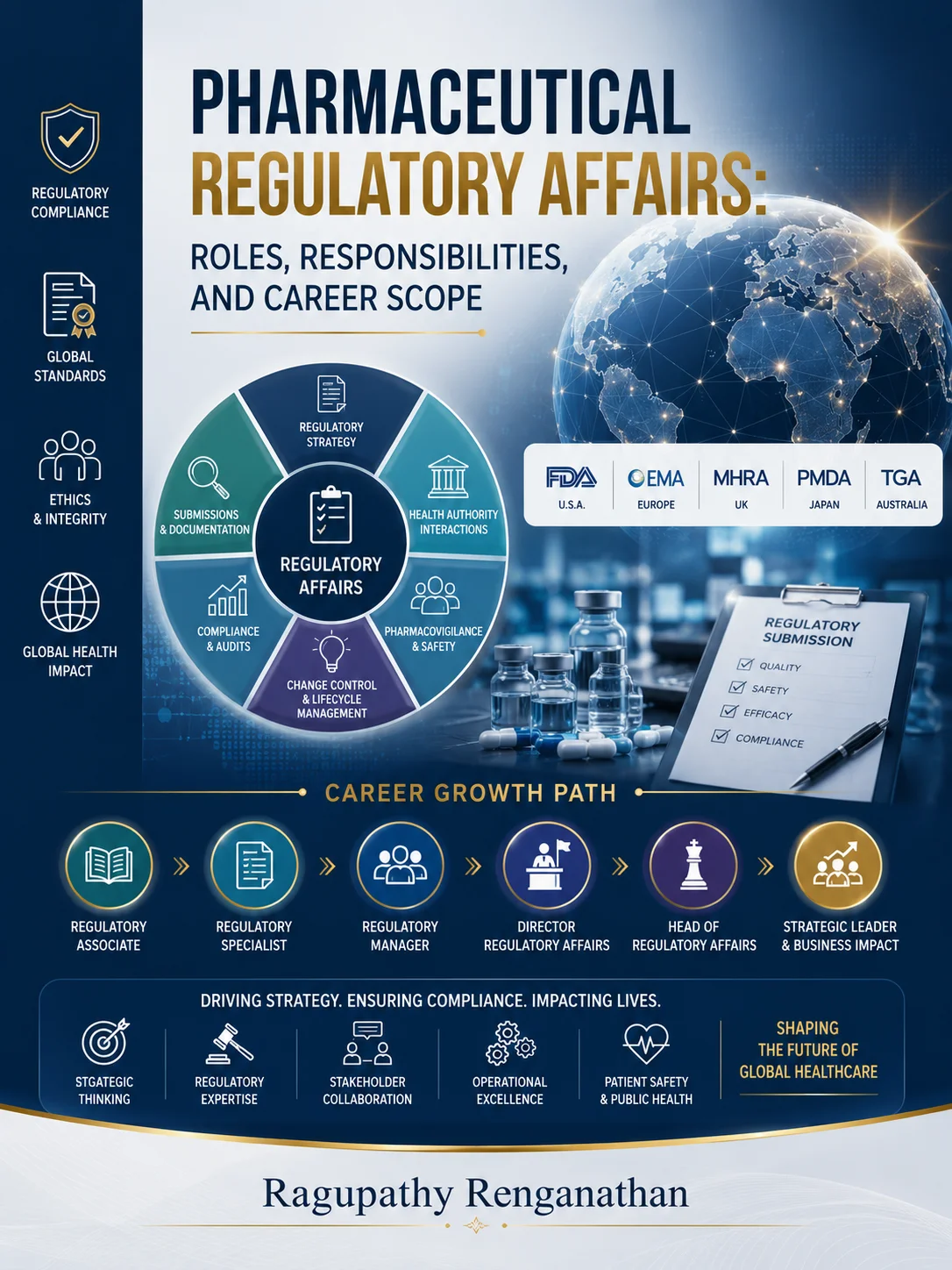
Regulatory Affairs acts as the official communication channel between pharmaceutical companies and agencies such as the United States Food and Drug Administration (US FDA), European Medicines Agency (EMA), Medicines and Healthcare products Regulatory Agency (MHRA), Health Canada, Therapeutic Goods Administration (TGA), Pharmaceuticals and Medical Devices Agency (PMDA), and Central Drugs Standard Control Organization (CDSCO).
The role requires a combination of scientific knowledge, regulatory expertise, documentation skills, strategic thinking, and effective communication.
Importance of Regulatory Affairs in the Pharmaceutical Industry
Regulatory Affairs plays a critical role in ensuring that pharmaceutical products reach patients safely and legally. Every product marketed by a pharmaceutical company must comply with regulatory requirements related to quality, safety, efficacy, manufacturing, labelling, packaging, clinical data, and post-marketing surveillance.
Without Regulatory Affairs, companies would struggle to obtain marketing approvals, resulting in delays, financial losses, and reduced patient access to important therapies. Regulatory professionals help organizations navigate complex approval pathways and minimize regulatory risks.
Regulatory Affairs also contributes to business growth by supporting product launches in multiple countries. Since each country has unique regulatory requirements, RA professionals help companies develop strategies that facilitate global market expansion.
In addition to product approvals, Regulatory Affairs helps maintain compliance throughout a product's lifecycle, reducing the risk of regulatory observations, warning letters, product recalls, and market withdrawals.
Ultimately, Regulatory Affairs supports both patient safety and organizational success.
Evolution of Regulatory Affairs
The field of Regulatory Affairs has evolved significantly over the years. Historically, regulatory activities focused primarily on product registration and submission management. Regulatory professionals prepared dossiers, submitted applications, and responded to agency questions.
Today, Regulatory Affairs has become much more strategic. Modern RA professionals participate in product development discussions, clinical development planning, risk management activities, lifecycle management strategies, and global expansion initiatives.
Advances in biotechnology, personalized medicine, gene therapy, digital health technologies, and artificial intelligence have increased regulatory complexity. As a result, Regulatory Affairs now plays a central role in helping organizations adapt to rapidly changing regulatory landscapes.
The profession continues to expand as regulatory expectations become increasingly sophisticated and globally interconnected.
Key Functions of Regulatory Affairs
Regulatory Affairs performs numerous activities throughout the pharmaceutical product lifecycle.
One of the primary functions is regulatory strategy development. RA professionals evaluate regulatory pathways and identify the most efficient approach for obtaining product approvals.
Another important responsibility is preparing and submitting regulatory dossiers. These submissions contain scientific, clinical, manufacturing, and quality information required by regulatory agencies for product evaluation.
Regulatory Affairs also manages communication with health authorities. This includes responding to regulatory queries, coordinating meetings, submitting additional information, and negotiating approval conditions.
In addition, RA professionals monitor regulatory changes and assess their potential impact on company products and operations.
These activities help ensure regulatory compliance and support successful product commercialization.
Product Registration and Regulatory Submissions
One of the most visible responsibilities of Regulatory Affairs is managing product registration activities.
Before a pharmaceutical product can be marketed, regulatory agencies require comprehensive documentation demonstrating product quality, safety, and efficacy. Regulatory Affairs professionals coordinate the preparation of these submissions and ensure compliance with applicable requirements.
The Common Technical Document (CTD) format is widely used for regulatory submissions across multiple regions. The CTD typically includes information related to administrative data, quality documentation, non-clinical studies, clinical studies, manufacturing processes, and labelling information.
RA professionals compile information from multiple departments, including Research and Development, Quality Assurance, Quality Control, Manufacturing, Clinical Research, and Pharmacovigilance.
Successful submission management requires exceptional organizational and project management skills.
Regulatory Intelligence and Compliance Monitoring
Regulations frequently change as health authorities update guidance documents, standards, and compliance expectations. Regulatory Affairs professionals continuously monitor these changes to ensure organizational compliance.
Regulatory intelligence involves tracking new regulations, reviewing guidance documents, analyzing regulatory trends, and evaluating potential business impacts.