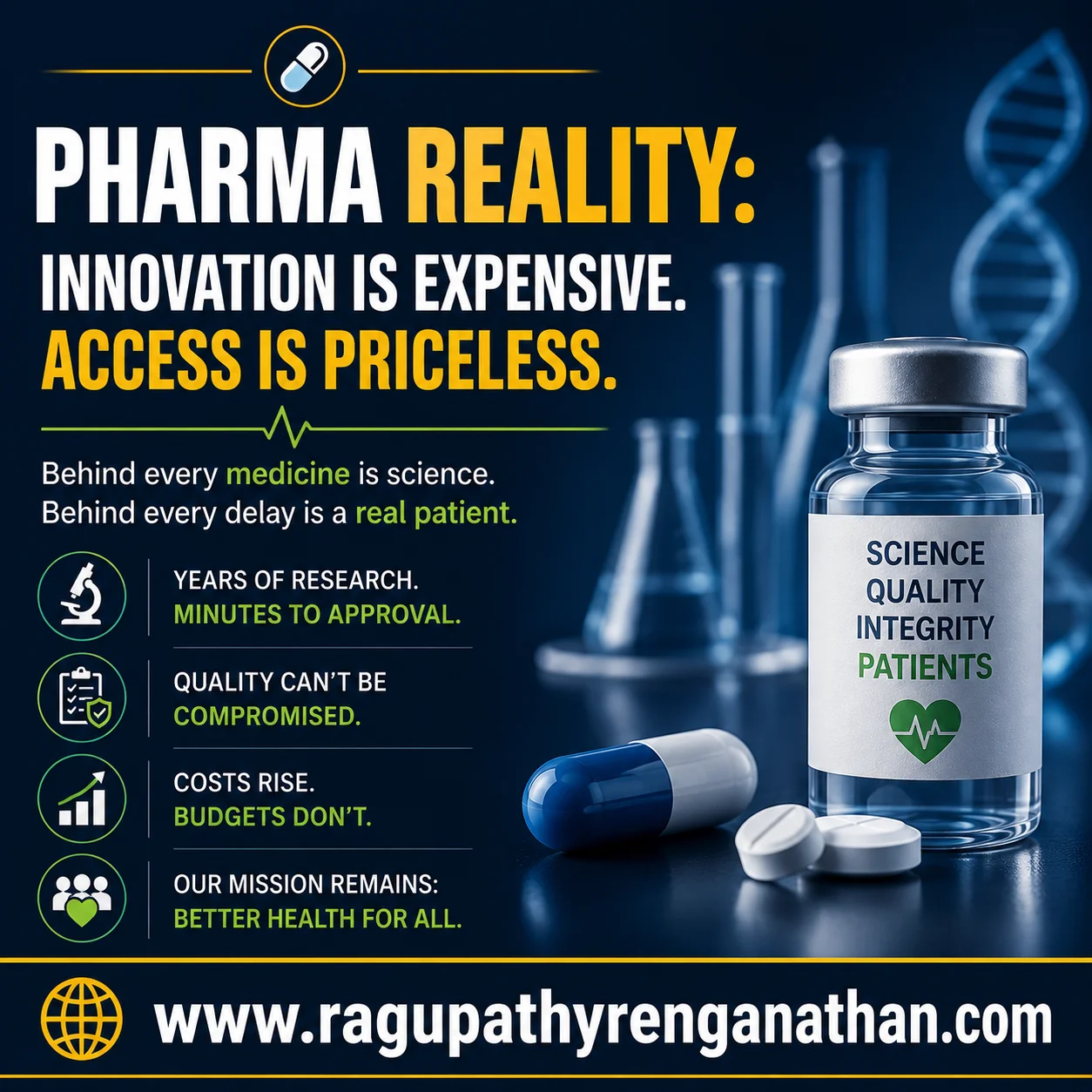

The pharmaceutical industry is built around one of the most complex value propositions in modern healthcare: transforming scientific discovery into medicines that can improve, extend, or save human lives. Behind every new medicine lies years of scientific research, preclinical development, clinical trials, regulatory evaluation, manufacturing development, quality assurance, intellectual property protection, and commercial investment. Pharmaceutical innovation is therefore inherently expensive.
However, the economic value of a medicine is only one part of the equation. Its true societal value is ultimately determined by whether patients who need it can access it.
This creates one of the most important strategic challenges facing the pharmaceutical industry today. How can companies continue investing billions in high-risk research and development while ensuring that innovative medicines remain accessible to the patients and healthcare systems that need them? The question is not simply about price. It involves research economics, intellectual property, manufacturing capacity, healthcare financing, regulatory policy, supply-chain resilience, reimbursement systems, technology transfer, market access, and the broader responsibilities of the pharmaceutical ecosystem.
Pharmaceutical innovation begins long before a medicine reaches a pharmacy. A promising molecule may emerge from years of basic research, computational screening, target identification, formulation development, medicinal chemistry, biotechnology, or academic research. Thousands of potential compounds may be investigated before a small number progress toward clinical development. Many candidates ultimately fail because of inadequate efficacy, safety concerns, pharmacokinetic limitations, manufacturing challenges, or unfavorable benefit-risk profiles.
The cost and uncertainty associated with pharmaceutical research create a fundamental economic challenge. Companies must invest substantial capital today for a potential commercial return that may occur many years later, while accepting the possibility that the investment may never generate a successful medicine. Clinical development further increases complexity because medicines must demonstrate acceptable safety and efficacy through increasingly sophisticated clinical programs. Regulatory requirements, specialized manufacturing technologies, global trials, pharmacovigilance systems, and post-marketing commitments add additional layers of investment.
Yet patients rarely experience this complexity directly. For a patient, the outcome is much simpler. There is a disease, there is a treatment, and there is a question: Can I get it?