

Introduction
In today's pharmaceutical industry, Data Integrity has become one of the most critical pillars of Good Manufacturing Practices (GMP). Every batch manufactured, every laboratory test performed, every equipment calibration, and every quality decision depends on the accuracy, reliability, and traceability of recorded data. Regulatory authorities such as the USFDA, EMA, MHRA, WHO, and CDSCO have significantly increased their focus on Data Integrity during inspections because inaccurate, incomplete, or manipulated data can directly compromise product quality and patient safety.
Over the last decade, numerous Warning Letters issued by global regulatory agencies have highlighted serious deficiencies related to missing laboratory data, unauthorized changes to electronic records, poor documentation practices, and failure to maintain complete records. These observations demonstrate that Data Integrity is not merely a regulatory expectation but a fundamental responsibility of every pharmaceutical organization.
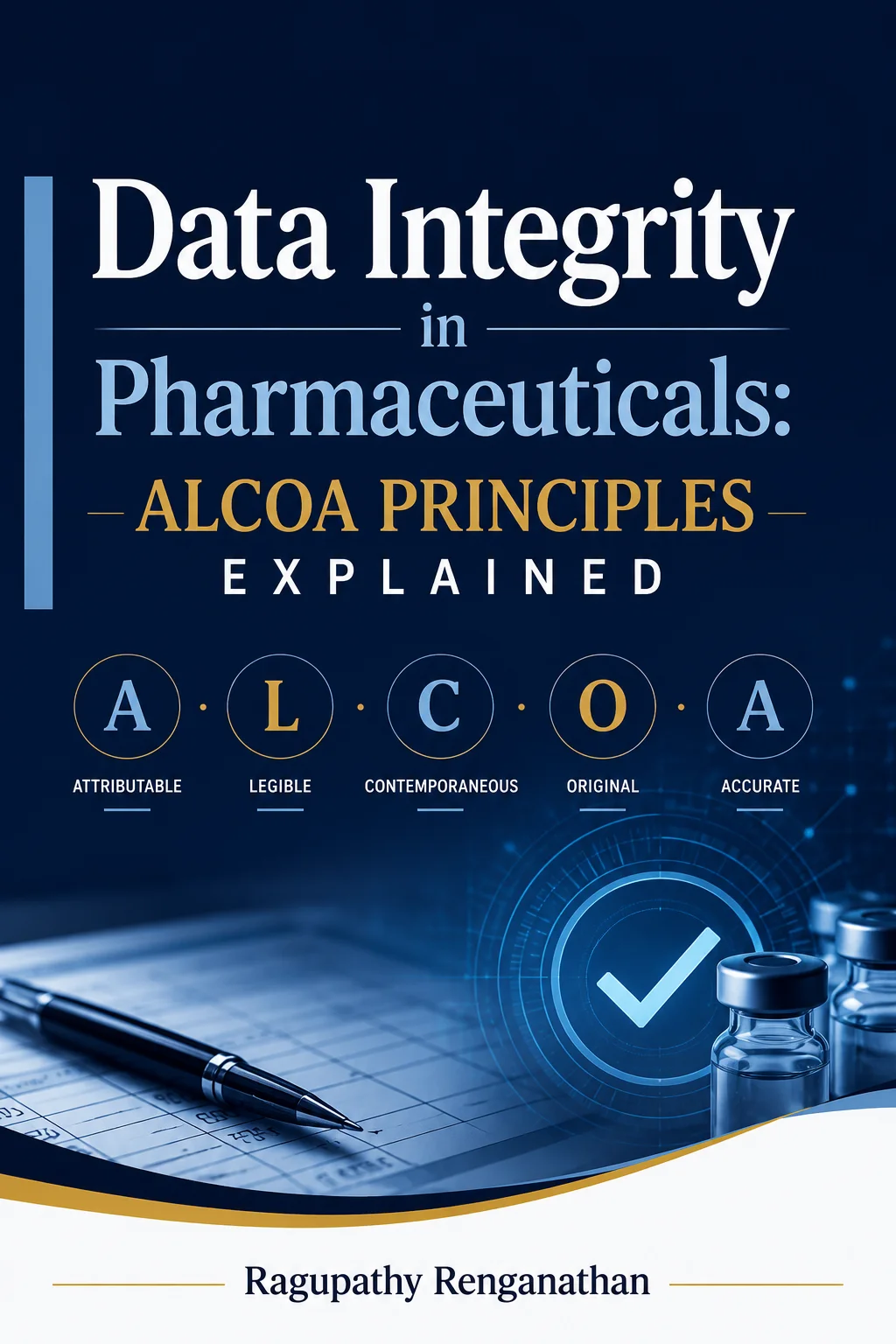
To establish globally accepted standards for reliable documentation, regulatory agencies introduced the ALCOA Principles, which serve as the foundation of pharmaceutical Data Integrity. These principles ensure that all records generated throughout a product's lifecycle remain trustworthy, traceable, and suitable for regulatory review.
Understanding Data Integrity in Pharmaceuticals
Data Integrity refers to the completeness, consistency, accuracy, and reliability of data throughout its entire lifecycle. It ensures that data remains unchanged except through authorized and documented processes, allowing organizations to make informed quality decisions.
Every pharmaceutical organization generates thousands of records every day. These include:
* Raw Material Testing Reports
* Batch Manufacturing Records (BMR)
* Batch Packaging Records (BPR)
* Laboratory Analytical Reports
* Equipment Calibration Records
* Cleaning Validation Reports
* Environmental Monitoring Records
* Stability Study Data
* Training Records
* Deviation Reports
* CAPA Documentation
* Audit Reports
Every one of these records contributes to demonstrating that medicines are consistently manufactured according to approved quality standards.
If any record is inaccurate, incomplete, altered without authorization, or cannot be traced back to its source, the integrity of the entire quality system becomes questionable. Therefore, Data Integrity is essential not only for regulatory compliance but also for protecting patient safety and maintaining public trust.
The ALCOA Principles Explained
The ALCOA acronym represents the five fundamental characteristics that every pharmaceutical record must possess.
A – Attributable
Every piece of data should clearly identify who performed the activity and when it was performed.
Each record should include:
* Operator name
* Signature or Electronic Signature
* Date
* Time
*System-generated Audit Trail where applicable
For example, when a Quality Control analyst records HPLC results, the laboratory notebook or electronic system should clearly identify the analyst responsible for generating the data. Shared user accounts or anonymous entries violate this principle because accountability cannot be established.
L – Legible
Data must remain readable throughout its required retention period.
Whether documentation is paper-based or electronic, information should be:
* Clear
* Permanent
* Easy to interpret
* Protected from deterioration
Illegible handwriting, faded ink, damaged records, or corrupted electronic files may compromise regulatory compliance. Electronic systems should also ensure long-term readability even after software upgrades or migrations.
O – Original
Original data represents the first recorded observation or a certified true copy of that observation.
Examples include:
* Original Laboratory Worksheets
* Instrument-generated Chromatograms
* Electronic Raw Data
* Equipment Logbooks
* Original Batch Records
Photocopies or manually rewritten information cannot replace original records unless they are properly verified and certified. Maintaining original records enables investigators to reconstruct every manufacturing activity accurately.
A – Accurate
All recorded information must be truthful, complete, and free from errors.
* Accuracy includes:
* Correct calculations
* Correct units
* Correct analytical results
* Correct transcription
* Properly calibrated instruments
If mistakes occur, they should be corrected following GMP documentation practices instead of being erased or concealed.
For paper records, corrections should involve a single strike-through, initials, date, and justification where required.
ALCOA+ Principles
Modern regulatory agencies have expanded ALCOA into ALCOA+ by adding four additional principles that further strengthen Data Integrity.
Complete
All data generated during an activity should be retained.
No observations, calculations, test results, or repeat analyses should be omitted.
Consistent
Data should follow the correct chronological sequence.
Dates, times, and activities should remain logical and traceable.
Enduring
Records should remain permanently available throughout their required retention period.
Electronic backup systems and secure archival procedures help ensure long-term preservation.
Available
Authorized personnel and regulatory inspectors should be able to retrieve records whenever required.
Poor filing systems or inaccessible electronic databases violate this expectation.
Why Data Integrity Matters