

Introduction
A clinical trial protocol is the foundation upon which every successful clinical study is built. Regardless of therapeutic area, study phase, or geographical location, the protocol serves as the master document that defines the scientific rationale, study objectives, methodology, statistical considerations, operational procedures, and ethical safeguards necessary to conduct a clinical trial. It ensures that investigators, sponsors, Contract Research Organizations (CROs), Ethics Committees, Institutional Review Boards (IRBs), and regulatory authorities follow a consistent and scientifically sound approach throughout the research lifecycle.
As clinical research becomes increasingly global and complex, protocol design has evolved beyond a simple study plan into a strategic document that directly influences patient recruitment, protocol adherence, data quality, regulatory approval timelines, study costs, and ultimately the success of drug development programmed. Poorly designed protocols frequently result in protocol amendments, delayed recruitment, increased operational costs, data inconsistencies, regulatory observations, and even failed clinical studies. Conversely, well-designed protocols improve study execution, minimize operational risks, strengthen inspection readiness, and enhance the credibility of clinical evidence submitted to health authorities.
Global regulatory agencies including the United States Food and Drug Administration (FDA), the European Medicines Agency (EMA), the Medicines and Healthcare products Regulatory Agency (MHRA), and other International Council for Harmonization (ICH) member authorities require clinical trial protocols to comply with Good Clinical Practice (ICH E6), scientific principles described in ICH E8(R1), and applicable regional regulatory requirements. Increasing emphasis is also being placed on Quality by Design (QbD), Risk Based Quality Management (RBQM), patient-centric trial design, decentralized clinical trials, and diversity in participant recruitment. These developments require research professionals to adopt a more strategic and multidisciplinary approach to protocol development.
For pharmaceutical companies, biotechnology organizations, academic research institutions, and CROs, protocol design is no longer merely a regulatory requirement. It is a critical business process that determines development timelines, resource allocation, regulatory success, patient safety, and commercial outcomes. Executive leadership increasingly recognizes that investing in high-quality protocol development reduces downstream operational challenges while accelerating product development and improving return on research investment.
This article explores the essential components of clinical trial protocol design, discusses best practices for developing scientifically robust and operationally feasible protocols, and examines how modern protocol development supports regulatory compliance, patient protection, and successful clinical research outcomes.
Essential Components of an Effective Clinical Trial Protocol
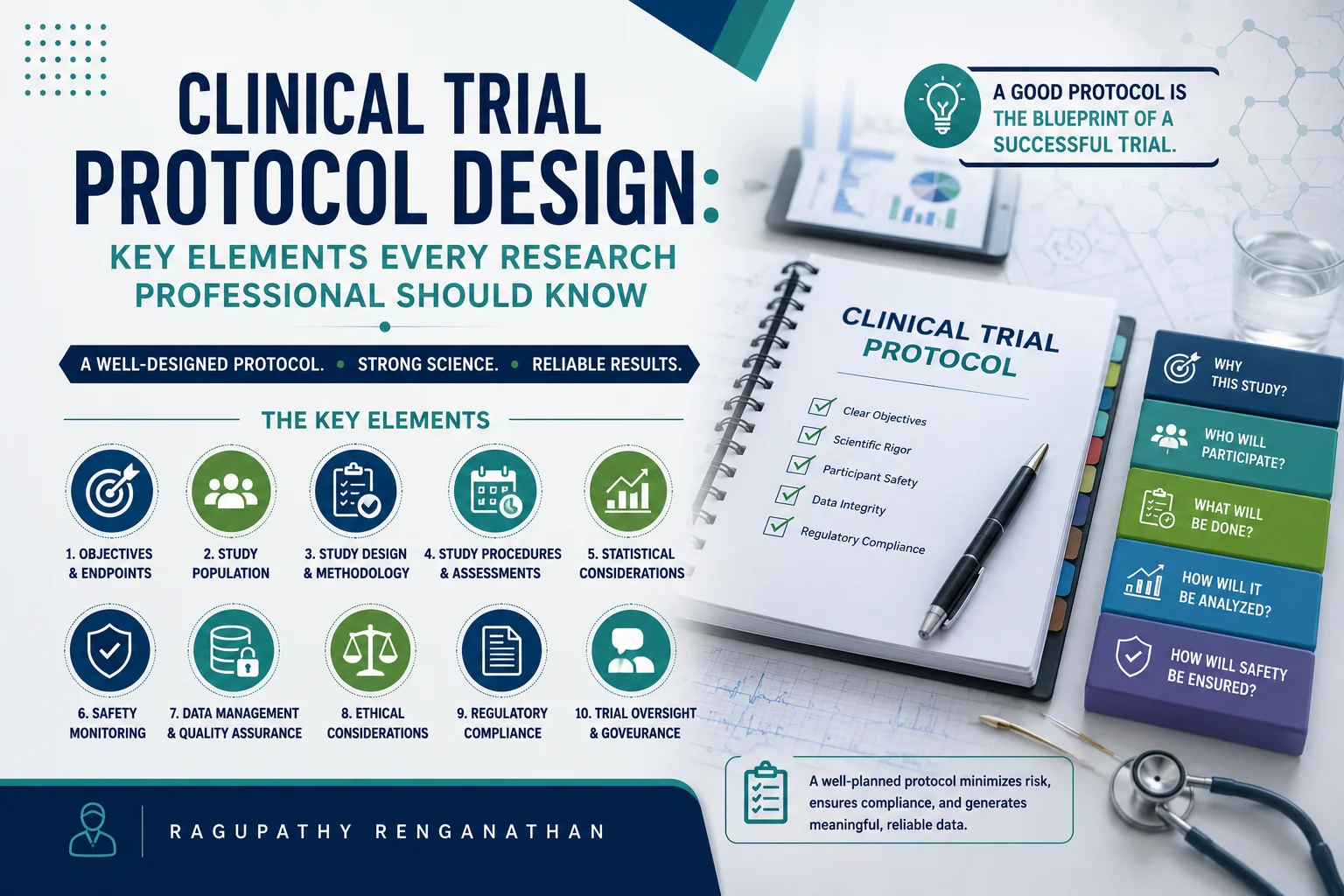
Every clinical trial protocol begins with a clearly defined scientific rationale. This section explains the medical need, existing treatment landscape, non-clinical evidence, previous clinical experience, and justification for conducting the proposed study. A strong scientific rationale demonstrates why the investigation is necessary and how it contributes to advancing medical knowledge or improving patient care. Regulatory authorities expect this justification to be supported by current scientific evidence and aligned with the product's overall development strategy.
Study objectives form the central framework of the protocol. Primary objectives identify the principal clinical question that the study intends to answer, while secondary and exploratory objectives evaluate additional efficacy, safety, pharmacokinetic, pharmacodynamic, biomarker, or quality-of-life outcomes. Clearly defined objectives ensure that study endpoints remain focused, measurable, and scientifically meaningful throughout trial execution.
Study design represents one of the most influential aspects of protocol development. Research professionals must determine whether the trial will be randomized, open-label, double-blind, placebo-controlled, active-controlled, adaptive, crossover, parallel-group, or pragmatic. The selected design should align with the research question while balancing scientific validity, patient safety, ethical considerations, operational feasibility, and regulatory expectations.
Eligibility criteria significantly influence participant recruitment and data quality. Inclusion criteria define the characteristics required for study participation, whereas exclusion criteria minimize safety risks and reduce potential confounding factors. Overly restrictive eligibility requirements frequently delay recruitment and reduce generalizability, while excessively broad criteria may compromise participant safety or study validity. Modern protocol development increasingly promotes balanced eligibility criteria that support both scientific rigor and broader patient representation.
Treatment plans describe investigational product administration, dosing schedules, treatment duration, dose modification criteria, rescue medications, concomitant therapy restrictions, investigational product accountability, and compliance monitoring. These sections should provide sufficient operational detail to ensure consistent treatment administration across all participating sites while maintaining participant safety.