

Introduction
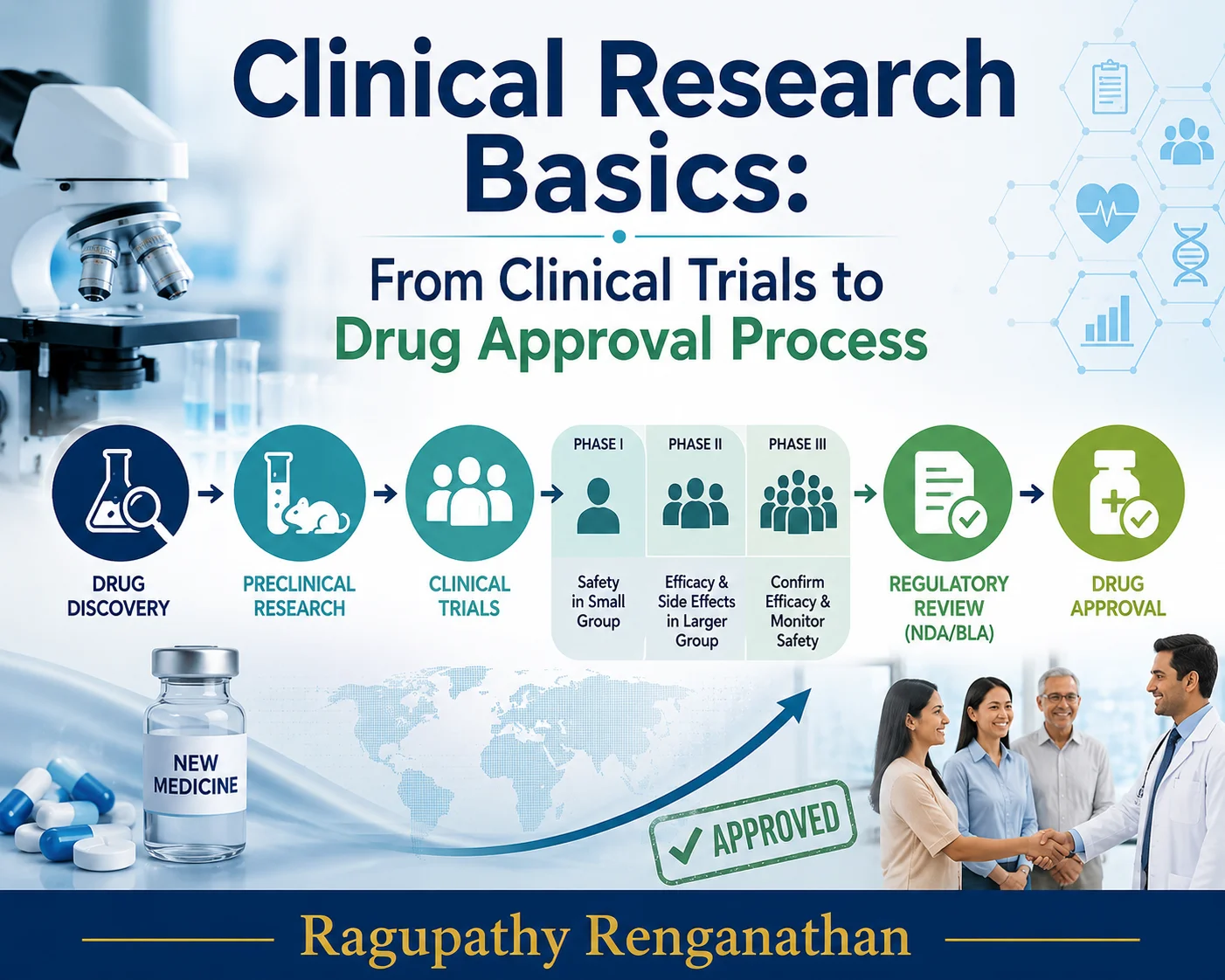
Every medicine available in the market today has undergone years of scientific research, testing, and regulatory evaluation before reaching patients. Whether it is a tablet for fever, an antibiotic for infections, an insulin injection for diabetes, or a life-saving cancer therapy, each pharmaceutical product must demonstrate that it is safe, effective, and of high quality. This journey from laboratory discovery to patient use is made possible through a structured process known as Clinical Research.
Clinical Research is one of the most important functions in the pharmaceutical, biotechnology, and healthcare industries. It provides scientific evidence regarding the safety, efficacy, dosage, and overall performance of new drugs, vaccines, medical devices, and treatment approaches. Without clinical research, healthcare professionals and regulatory authorities would have no reliable way to determine whether a medicine truly benefits patients.
The clinical research process involves carefully designed studies conducted in human volunteers under strict ethical, scientific, and regulatory standards. These studies, commonly known as clinical trials, help researchers evaluate how a drug behaves in the human body, identify potential side effects, determine appropriate dosages, and establish therapeutic benefits.
Today, clinical research is a global industry involving pharmaceutical companies, biotechnology firms, hospitals, research institutions, regulatory agencies, and healthcare professionals. Advances in technology, data analytics, personalized medicine, and biotechnology have made clinical research more sophisticated and important than ever before.
For pharmacy students, life science graduates, healthcare professionals, and individuals interested in pharmaceutical careers, understanding the fundamentals of clinical research is essential. This article provides a comprehensive overview of clinical research, clinical trial phases, regulatory requirements, drug approval processes, career opportunities, and future industry trends.
What is Clinical Research?
Clinical Research refers to scientific studies conducted in human participants to evaluate the safety, efficacy, and performance of medical products, treatments, therapies, or healthcare interventions.
Unlike laboratory experiments or animal studies, clinical research focuses on human subjects and provides direct evidence regarding how a treatment affects patients.
The primary objective of clinical research is to generate reliable data that supports medical decision-making and regulatory approval.
Clinical research encompasses various types of studies, including clinical trials, observational studies, epidemiological studies, post-marketing studies, and real-world evidence research.
Among these, clinical trials represent the most important component of drug development because they provide critical information required for regulatory approval.
Why Clinical Research is Important
Clinical research plays a vital role in advancing modern healthcare.
Before a medicine can be approved, researchers must demonstrate that its benefits outweigh its risks. Clinical trials provide the evidence needed to make this determination.
Clinical research helps identify appropriate dosages, evaluate treatment effectiveness, understand side effects, compare therapies, and improve patient outcomes.
It also contributes to medical innovation by supporting the development of new treatments for diseases that currently have limited therapeutic options.
Without clinical research, healthcare providers would lack the scientific evidence necessary to prescribe medicines confidently and safely.
Ultimately, clinical research protects patients while enabling the introduction of innovative therapies that improve quality of life.
Drug Development: The Journey Before Clinical Trials
The development of a new medicine begins long before clinical trials start.
Researchers first identify potential drug candidates through laboratory research and drug discovery activities. Thousands of compounds may be evaluated before a promising candidate is identified.
Once a candidate is selected, preclinical studies are conducted in laboratories and animal models. These studies evaluate toxicity, pharmacology, pharmacokinetics, and biological activity.
The objective of preclinical research is to determine whether the drug appears sufficiently safe for testing in humans.
Only a small percentage of compounds successfully complete preclinical development and move forward into clinical trials.
The entire drug development process is expensive, time-consuming, and highly regulated.
What is a Clinical Trial?
A clinical trial is a carefully planned research study conducted in human participants to evaluate the safety and effectiveness of a medical intervention.
Clinical trials follow detailed protocols that specify study objectives, participant eligibility criteria, treatment procedures, data collection methods, and statistical analyses.
The protocol serves as the blueprint for the study and ensures consistency across all participating sites.
Clinical trials are conducted according to ethical principles and regulatory requirements designed to protect participant rights, safety, and well-being.
The information generated from clinical trials forms the foundation for regulatory approval decisions.
Key Participants in Clinical Research
Clinical research involves collaboration among multiple stakeholders.
Sponsors, usually pharmaceutical or biotechnology companies, provide funding and oversee study management.
Investigators are qualified physicians responsible for conducting studies and ensuring participant safety.
Study participants volunteer to participate in clinical trials and contribute valuable information regarding treatment outcomes.
Clinical Research Coordinators manage day-to-day study activities, including patient scheduling, documentation, and data collection.
Regulatory authorities evaluate study data and determine whether products can be approved.
Ethics Committees or Institutional Review Boards review study protocols to ensure participant protection.
Each stakeholder plays an important role in ensuring the integrity and success of clinical research.
Understanding Informed Consent
One of the most important ethical requirements in clinical research is informed consent.
Before participating in a study, individuals must receive detailed information regarding study objectives, procedures, potential risks, expected benefits, alternative treatments, and participant rights.
This information is typically provided through an Informed Consent Form (ICF).
Participants must voluntarily agree to participate without coercion or undue influence.
The informed consent process ensures that participants understand what the study involves and can make informed decisions regarding participation.
Protecting participant rights and autonomy is a fundamental principle of ethical clinical research.
Clinical Trial Phases
Clinical trials are generally conducted in four major phases, each with specific objectives.
Phase I Clinical Trials
Phase I studies represent the first time a new drug is tested in humans.
These trials typically involve a small number of healthy volunteers or patients.