
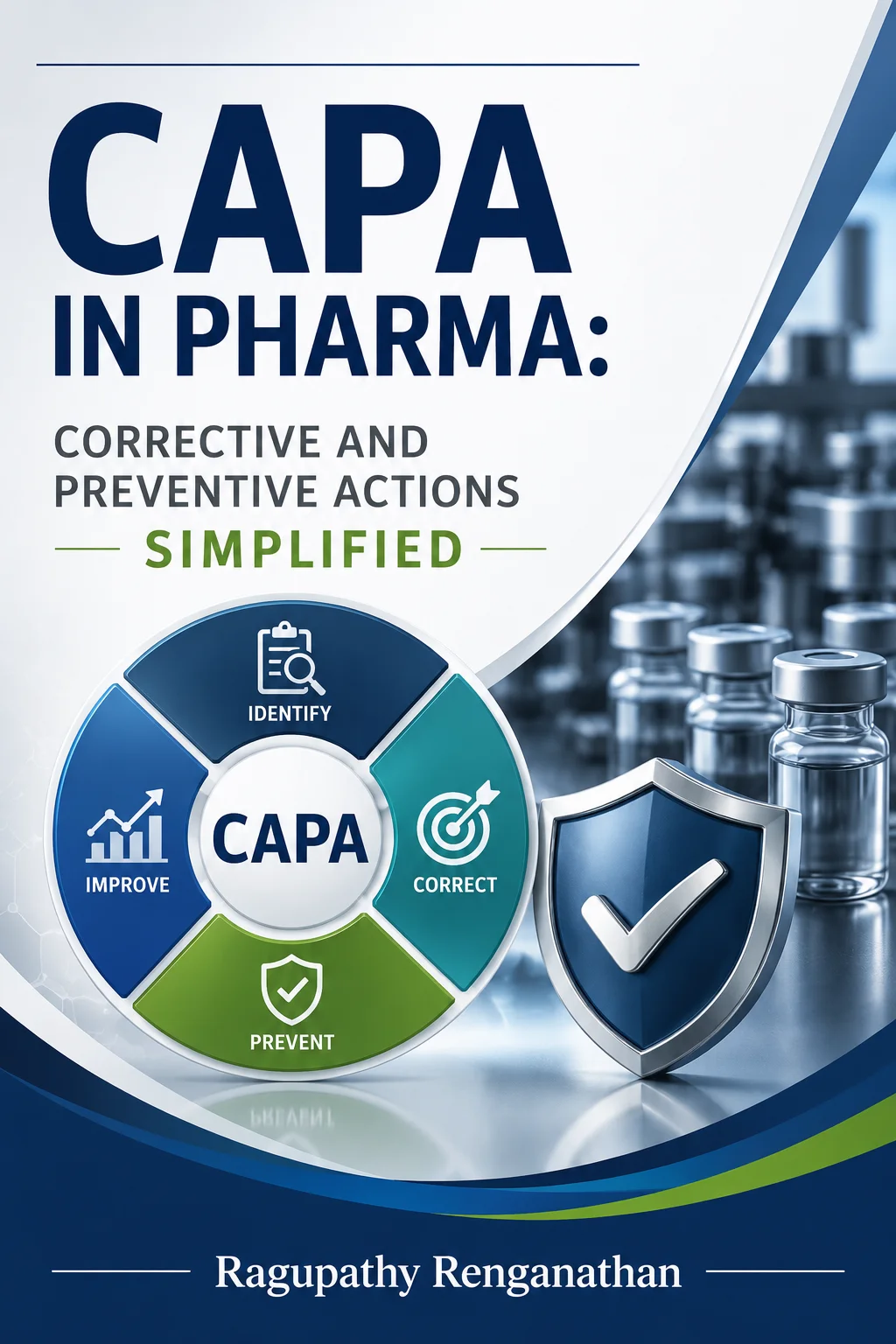

Introduction
The pharmaceutical industry operates under stringent regulatory requirements to ensure that every medicine manufactured is safe, effective, and of the highest quality. Despite having robust quality systems, deviations, non-conformities, customer complaints, audit observations, and manufacturing issues may still occur. What distinguishes a mature pharmaceutical organization is not the absence of problems but how effectively it identifies, investigates, and prevents them from recurring.
This is where Corrective and Preventive Action (CAPA) becomes one of the most important components of the Pharmaceutical Quality Management System (QMS). CAPA is a systematic approach used to investigate quality issues, determine their root causes, implement effective corrective measures, and establish preventive actions to avoid recurrence.
Regulatory agencies such as the USFDA, EMA, MHRA, WHO, and CDSCO closely evaluate CAPA systems during inspections because an ineffective CAPA process often indicates weaknesses in an organization's overall quality culture.
This article explains the fundamentals of CAPA, its importance, implementation process, documentation requirements, regulatory expectations, common mistakes, and best practices for building an effective CAPA system.
What is CAPA?
CAPA stands for Corrective and Preventive Action.
It is a structured quality management process used to identify, investigate, correct, and prevent quality-related problems throughout the pharmaceutical product lifecycle.
CAPA ensures that organizations do not simply fix a problem temporarily but identify the actual root cause and implement long-term solutions.
The primary objectives of CAPA are:
* Eliminate existing quality issues.
* Prevent recurrence of identified problems.
* Reduce operational risks.
* Improve manufacturing processes.
* Enhance product quality.
* Maintain regulatory compliance.
* Protect patient safety.
An effective CAPA system promotes continuous improvement across all departments within a pharmaceutical organization.
Difference Between Corrective Action and Preventive Action
Although often mentioned together, Corrective Action and Preventive Action have different purposes.
Corrective Action
Corrective Action is implemented after a problem has already occurred.
Its objective is to eliminate the root cause of an identified non-conformity so that the same issue does not happen again.
Example:
A tablet compression machine produces tablets with incorrect weight variation.
The organization investigates the issue, identifies worn-out punches as the root cause, replaces the tooling, updates maintenance procedures, and retrains operators.
This is a Corrective Action.
Preventive Action
Preventive Action is implemented before a problem occurs.
Its objective is to identify potential risks and eliminate them before they lead to deviations or product failures.
Example:
Trend analysis shows increasing vibration in a granulation machine.
Although no deviation has occurred, preventive maintenance is scheduled to replace worn bearings before equipment failure.
This is a Preventive Action.
Why CAPA is Important in Pharmaceuticals
CAPA plays a central role in maintaining a robust Quality Management System.
Its importance includes:
Ensures Product Quality
By identifying and eliminating root causes, CAPA helps maintain consistent product quality.
Protects Patient Safety
Poor quality medicines can result in therapeutic failure or adverse health outcomes.
CAPA minimizes these risks by preventing recurrence of quality issues.
Supports Regulatory Compliance
Regulatory inspectors frequently review CAPA records during GMP inspections.
A well-managed CAPA system demonstrates an organization's commitment to continuous improvement.
Reduces Manufacturing Costs
Repeated deviations, batch failures, recalls, and investigations consume significant resources.
CAPA reduces these avoidable costs.
Promotes Continuous Improvement
Organizations that effectively implement CAPA continually improve manufacturing efficiency, product quality, documentation, and employee performance.
Common Sources That Trigger CAPA
CAPA may originate from numerous quality events.
Common sources include:
* Deviations
* Out-of-Specification (OOS) results
* Out-of-Trend (OOT) results
* Customer complaints
* Product recalls
* Internal audits
* Regulatory inspections
* Equipment failures
* Environmental monitoring failures
* Validation failures
* Supplier quality issues
* Stability failures
* Laboratory errors
* Risk assessments
* Trend analysis
Each of these events should be evaluated to determine whether a CAPA is required.
The CAPA Process – Step by Step
A structured CAPA process generally follows these stages.
1. Problem Identification
The issue should first be clearly identified and documented.
Examples include:
* Failed analytical result
* Batch deviation
* Customer complaint
* Equipment malfunction
Accurate problem definition is essential for successful investigation.
2. Immediate Containment
Temporary actions may be required to prevent further impact.
Examples include:
* Quarantining affected batches
* Stopping production
* Blocking product release
* Isolating defective materials