
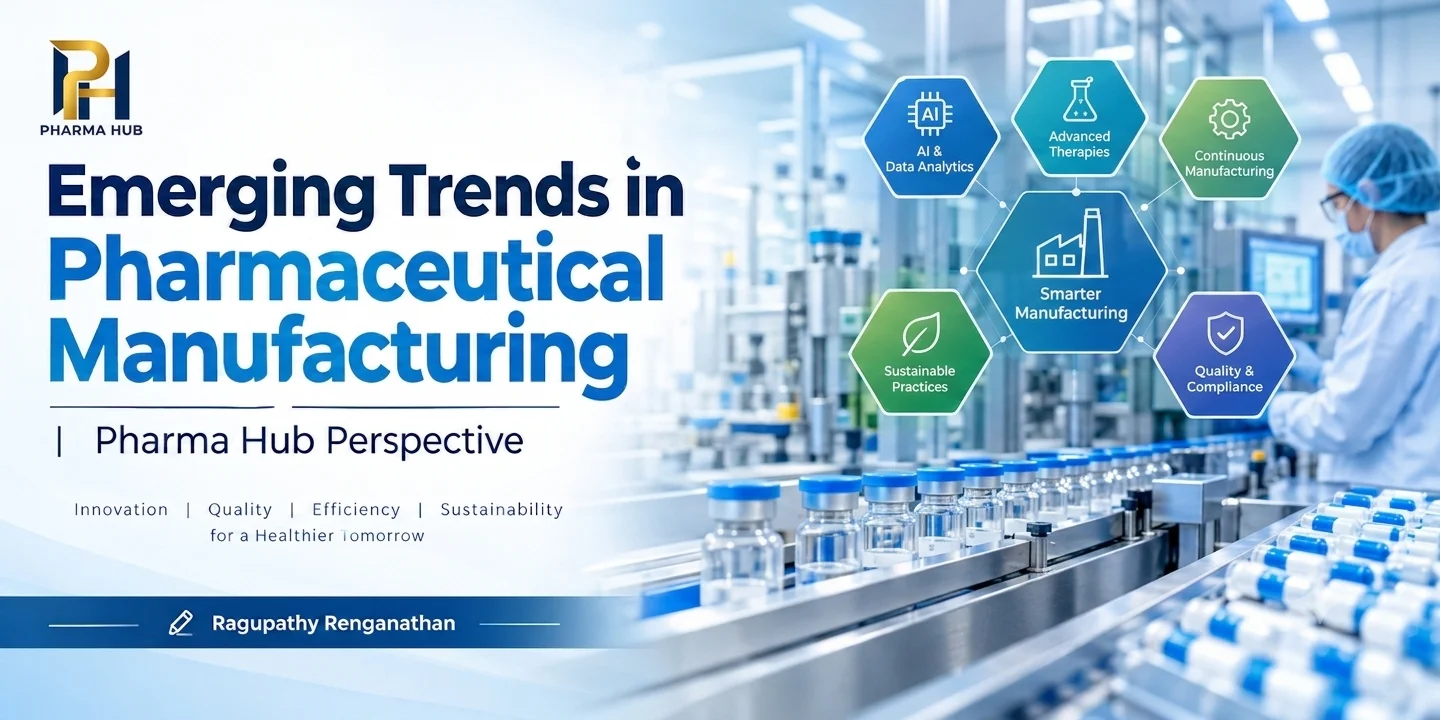

Pharmaceutical manufacturing is undergoing a significant transformation driven by scientific innovation, digital technologies, evolving regulatory expectations, supply chain challenges, and the growing demand for high-quality medicines. Traditionally, pharmaceutical manufacturing has focused on producing medicines that consistently meet predefined quality specifications through validated processes, controlled environments, and established quality assurance systems.
Today, the industry is moving towards more intelligent, connected, flexible, and science-driven manufacturing models that integrate product development, process understanding, quality risk management, and lifecycle management. These changes are particularly important as pharmaceutical companies expand their portfolios to include complex generics, biologics, advanced therapies, high-potency compounds, and patient-specific medicines. Understanding these developments is essential for pharmaceutical scientists, manufacturing professionals, quality specialists, regulatory experts, and industry leaders. Through Pharma Hub Perspective, this article explores the emerging trends shaping pharmaceutical manufacturing and examines their practical implications for product quality, operational efficiency, regulatory compliance, and sustainable industrial growth.
The Evolution Towards Intelligent and Science-Driven Manufacturing
One of the most important developments in pharmaceutical manufacturing is the transition from conventional production systems towards digitally enabled and data-driven operations. Digital transformation is no longer limited to automating individual manufacturing activities. It increasingly involves connecting equipment, process parameters, laboratory results, electronic batch records, quality systems, and supply chain information to create a more comprehensive understanding of manufacturing performance. Manufacturing execution systems, electronic laboratory information management systems, enterprise resource planning platforms, and electronic quality management systems can help pharmaceutical companies improve data accessibility, traceability, and operational coordination. When appropriately integrated, these systems enable manufacturers to identify process deviations earlier, reduce documentation-related errors, improve batch review efficiency, and make better-informed decisions throughout the product lifecycle.
Artificial intelligence and machine learning are emerging as valuable tools for analyzing complex manufacturing datasets. Pharmaceutical production generates substantial quantities of information through equipment sensors, analytical instruments, environmental monitoring systems, and in-process controls. Traditional analytical approaches may not always identify subtle relationships between process variables and product quality, particularly when multiple parameters interact. Machine learning models can help identify patterns associated with process variability, equipment performance, yield fluctuations, and potential quality risks. For example, in tablet manufacturing, relationships between granulation moisture, granule size distribution, compression force, tablet hardness, and dissolution performance may be explored using historical process data. Such models can support process understanding and investigation prioritization, provided that their outputs are scientifically evaluated and appropriately controlled.